Books

Books

Nine books in Italian (seven of them essays and two poetry), three translated editions in English and French, and work for the stage, on Islamic theology, education, poetry and the meeting of Islam with Western thought.

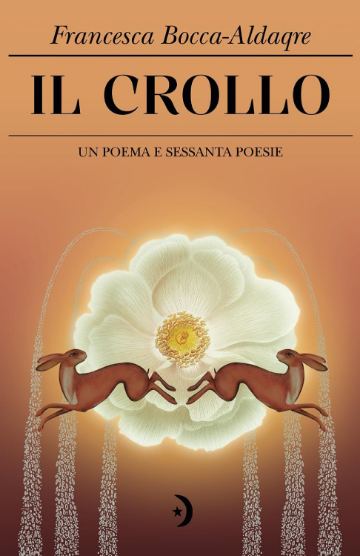
Cover of Il Crollo
Independently published · Dec 2024

Il Crollo. Un poema e sessanta poesie

The Collapse: One Long Poem and Sixty Poems

Her second poetry collection, published in her own series of Islamic poetry notebooks (Quaderni di poesia islamica). The title comes from Rumi’s Mathnawi, which compares a moment of spiritual insight to a wall falling down so that the moon behind it can be seen. “The collapse” is that moment, when the surface of things gives way and the reality behind it can be sensed. The poems circle around it: sometimes as witness, sometimes in fear, and sometimes as escape. 100 pages.
Book page → · Goodreads

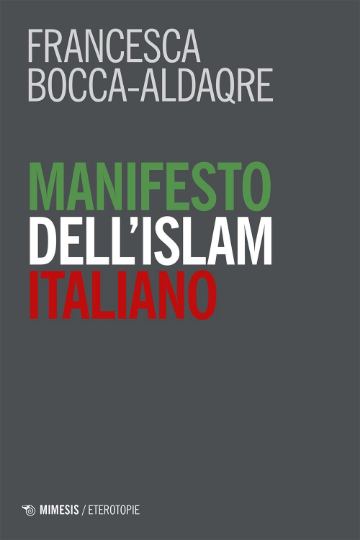
Cover of Manifesto dell’Islam Italiano
Mimesis · 2024

Manifesto dell’Islam Italiano

Manifesto of Italian Islam

The presence of Muslims in Italy is a central topic of political debate, yet it has rarely been addressed well. Written by an Italian Muslim in language accessible to Western readers, the book brings historical, philosophical and sociological material, much of it new to Italian, to the most contested questions: the veil, integration, terrorism and minority rights. It also traces the older causes that have kept a continuous Islamic presence from taking root in Italy, from historical events to unconscious fears and prejudices built into the language over centuries. Weighing approaches that range from interreligious dialogue to political demands, it argues that culture is the key to real integration. Its aim is twofold: to help Italians see Muslims in a new light, and to help Italian Muslims build an identity that belongs fully to Italy.

Book page → · Il Fatto Quotidiano review · Medio Oriente e Dintorni review

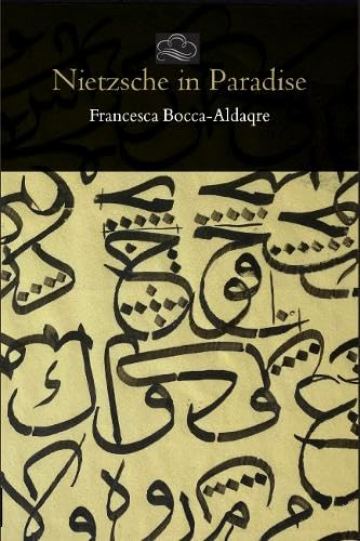
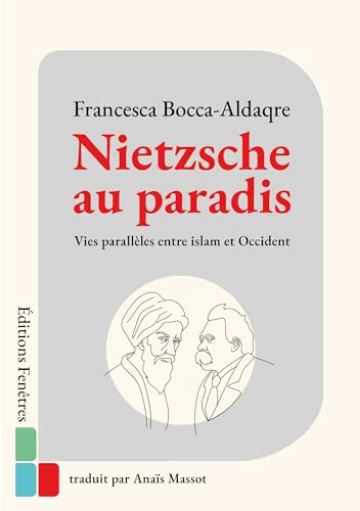
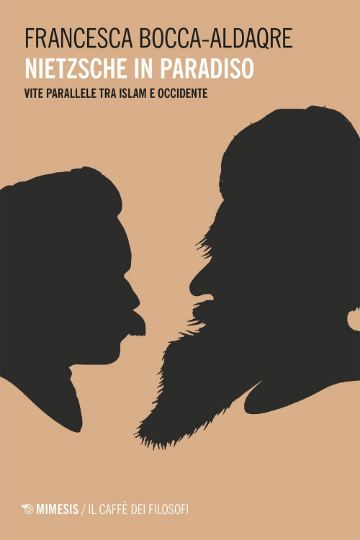
Cover of Nietzsche in Paradiso
Mimesis · 2021

Nietzsche in Paradiso

Nietzsche in Paradise: Parallel Lives between Islam and the West

The book traces intellectual exchange between Europe and the Muslim world through six pairs of thinkers who usually sit in separate worlds: Nietzsche and Muhammad Iqbal, Ernst Jünger and Jamāl al-Dīn al-Afghānī, Tolstoy and Imam Shamil, Heidegger and Ibn ʿArabī, Merleau-Ponty and Alhazen (Ibn al-Haytham), and Descartes and al-Ghazālī. Setting their lives and ideas side by side shows how these intellectual family trees intertwine, and questions the idea of a fixed cultural border between Europe and Islam. Short but conceptually rich, it introduces difficult philosophical ideas in an accessible and creative way. Reviewers have called it a genuine alternative to the “clash of civilisations” story. It has also been published in English and French.

Book page → · English edition · Review · Book talk (video)

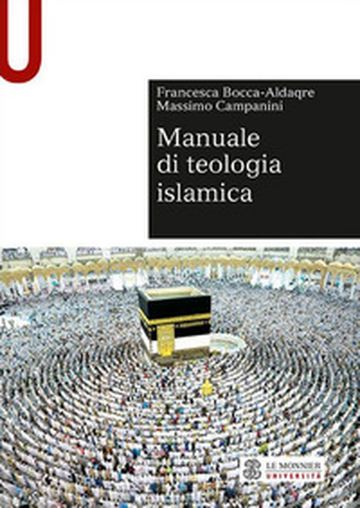
Cover of Manuale di Teologia Islamica
Le Monnier Università · 2021

Manuale di Teologia Islamica

A Handbook of Islamic Theology

Theology is a defining dimension of Islam, and theological differences account for much of the diversity in the Muslim world, yet it has been studied far less than Islamic law or mysticism. Starting from a philosophical reading of the sources, especially the relationship between scripture and reason, this university handbook introduces Islam’s creed and its core doctrines. A historical survey running from the life of the Prophet Muhammad to the present explains today’s differences, following classical thought as it crystallised, declined and was revived by reform movements. A large section covers the theology of Sufism and Shiʿism, and where each meets and departs from majority Sunni thought. It was co-written with Massimo Campanini, one of Italy’s leading historians of Islamic thought.

Book page →

Cover of Lezioni sull’Islam
IISI · 2020

Lezioni sull’Islam

Lessons on Islam: Practice, Belief and Spirituality

This book grew out of her teaching at the Italian Institute of Islamic Studies, where she needed one text that served both young Muslims and university students from other fields. Using the tools of systematic theology, it builds a complete introduction to Islamic studies around the classic threefold division of the religion: islām (practice), īmān (faith) and iḥsān (spiritual excellence). It covers worship, the schools of law, the creed and the spiritual path, drawing on primary sources, classical and contemporary Islamic theology, and Western academic scholarship. The author presents it as a first step toward a systematic Islamic theology, putting each part of Islam in its proper place. 308 pages.

Book page →

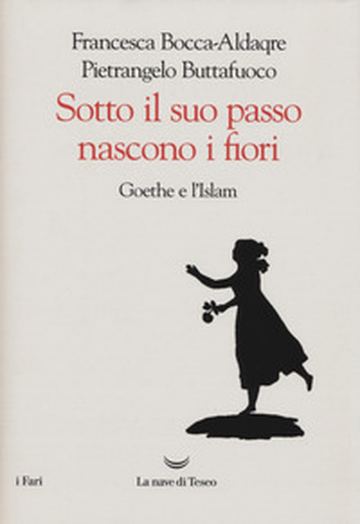
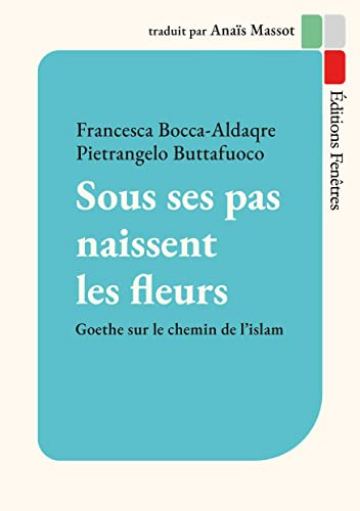
Cover of Sotto il suo passo nascono i fiori
La nave di Teseo · 2019

Sotto il suo passo nascono i fiori

Flowers Bloom Beneath His Footsteps: Goethe and Islam

As Goethe lay dying, he raised his index finger, a gesture that puzzled the people around him for centuries. Bocca-Aldaqre and Pietrangelo Buttafuoco read it as the gesture of the shahāda, the Muslim testimony of faith made at the point of death. Drawing on Goethe’s archives, letters and the accounts of those closest to him, they follow his relationship with Islam from his first reading of the Qur’an in 1770 to his death in 1832, including its place in his love for Marianne von Willemer, and trace its influence through his poems, plays and essays. The book closes by imagining a European future linked to “an Islam tempered by the skies of the Mediterranean.” It has also been published in French.

Book page →

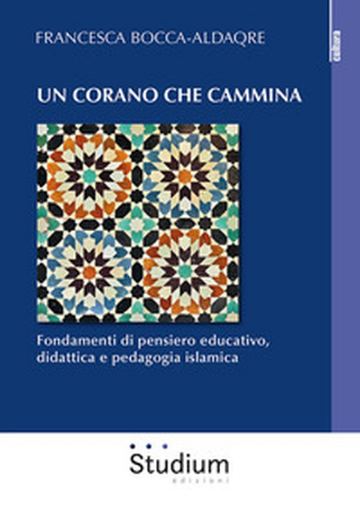
Cover of Un Corano che cammina
Studium · 2018

Un Corano che cammina

A Walking Qur’an: Foundations of Islamic Educational Thought, Teaching and Pedagogy

The title comes from a well-known description of the Prophet’s character as “a Qur’an who walked among us,” an idea that underlies all Islamic pedagogy: educating people who embody the Qur’anic model. The first part traces the history of education in the Muslim world through commentary on classical treatises and a survey of its institutions: the kuttāb (Qur’an school), the madrasa and the university. After examining the decline of Islamic thought, the second part presents modern Islamic pedagogy, especially its reformist strands. The book ends with an original framework connecting theological sources to modern developmental psychology, laying the foundations for an Islamic philosophy of human development.

Book page →

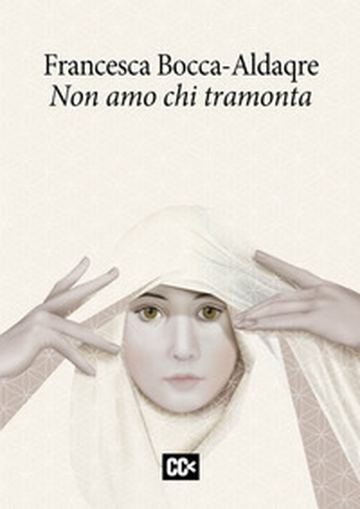
Cover of Non amo chi tramonta
CartaCanta · 2020

Non amo chi tramonta

I Do Not Love Those That Set

Her poetry collection takes its title from the words of the Prophet Abraham in the Qur’an (6:76), spoken as he turns away from the setting stars, moon and sun toward God. The poems move between feminine delicacy and strength, illness and love, and a mystical longing held within the discipline of verse. One line, in the section on joy, cries out: “Reveal to me the hundredth name.” The poet Davide Rondoni calls it a remarkable book of Italian poetry, and places it in a line of world poets that runs from Dante and Rumi to Dylan Thomas and Mario Luzi.

Book page →

Other works

Curriculum, stage and verse

  • Editor · 2018

    Studi islamici. Piano didattico per bambini

    Edizioni an-Nasiha. An Islamic studies curriculum for Muslim children and teenagers, sold as an eight-volume course. The Averroè Institute was the first Islamic school in Italy to teach religion from Italian-language texts, and she edited them herself.

  • Libretto · 2021

    Le ore delle spose (The Hours of the Brides)

    A chamber opera for Teatro Coccia in Novara, with music by Béla Bartók and Claudio Scannavini, directed by Deda Cristina Colonna. Starting from the Bluebeard story, she tells of two halves of one bride, Judith and Ariadne, who free themselves from an absent, unfaithful husband. She describes it as a story about the soul’s climb toward salvation: “theology emerging from inside the theatre.”

  • Sonnet

    Cuore divorato (The Devoured Heart)

    A stage piece about love directed by Gioele Dix. She was one of three poets asked to write a sonnet in reply to a sonnet by Dante.